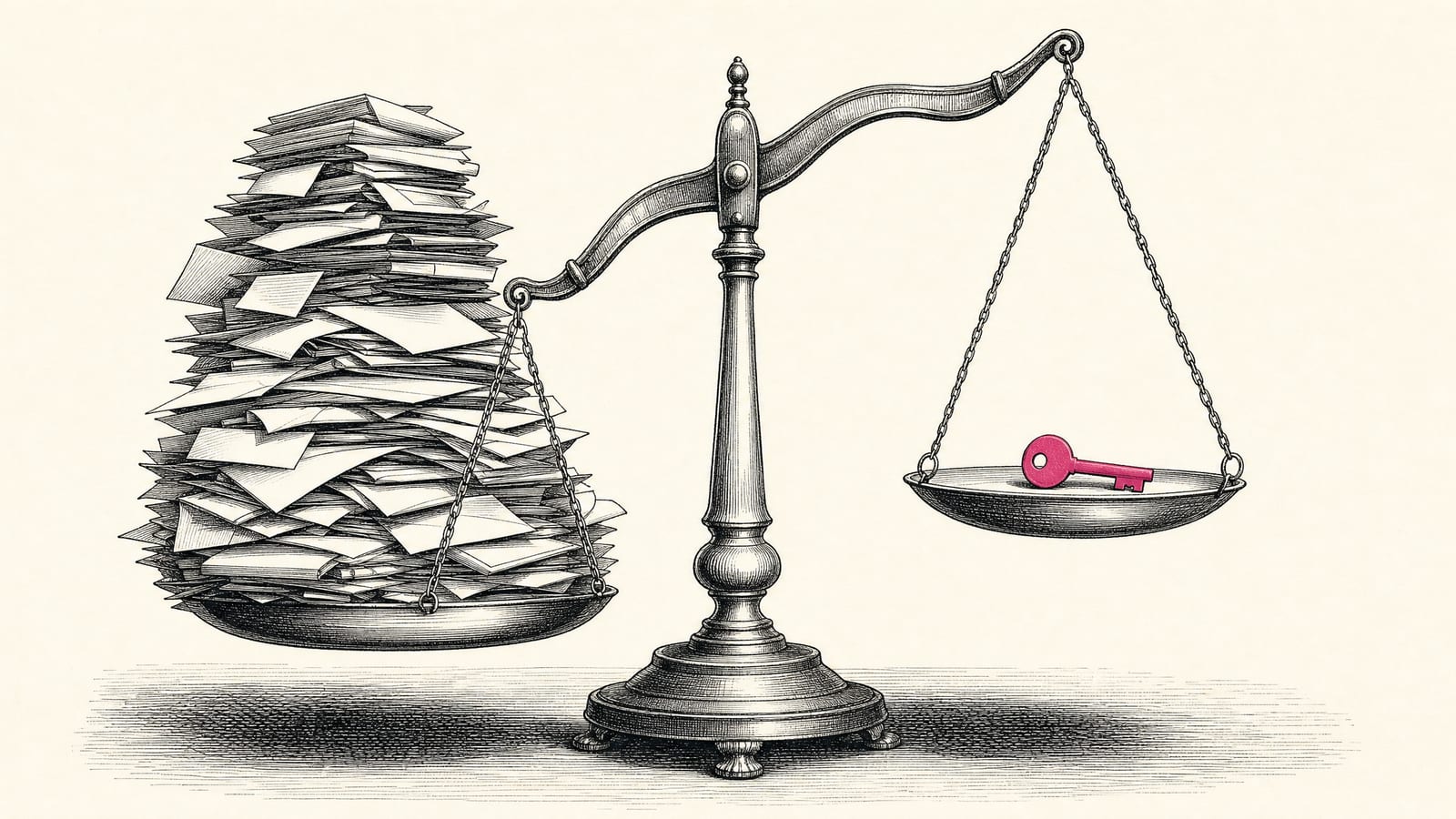

Every private parking charge is built on the same bet: that you'll pay it, or ignore it until it goes away. Most people do. So what actually happens to the operator's maths the moment you don't?
It costs them. Not in the vague, feel-good way people say that to justify pushing back. There's a real, published fee behind part of it, a genuine documented transparency gap in the rest, and a market-wide number that explains why the whole model depends on you not bothering. Here's what's actually on the record.
The model depends on you not appealing
Parking operators issue charges at huge volume and low cost per notice: a camera, a template letter, a DVLA lookup. The charge only pays for itself if most people settle without a fight.
The RAC's analysis of DVLA data gives a genuine sense of the scale here: private parking firms made a record 14.4 million requests to the DVLA for vehicle keeper details in the 2024/25 financial year [1]. That's not a count of charges issued, and it's a financial year, not a calendar one, but a DVLA lookup is usually the step before a charge notice goes out, so it's a fair proxy for how much of this machine is running. We don't have a verified figure for what share of recipients go on to appeal. What we do have is what happens to an operator's model on the appeals that do get made.
It's also why what operators spend, or don't spend, on the equipment behind the charge is worth its own look. We went through six operators' own Companies House accounts on exactly that: The Cameras Behind Your Parking Charge Are Written Off. This piece asks a narrower question: what happens to an operator's costs specifically when you appeal.
Internal handling: the part nobody bills for
Before an appeal reaches an independent adjudicator, someone at the operator has to read it. That means:
- a person, not a template, looking at your evidence
- a written response instead of an automated rejection
- a case file that now has to be tracked instead of closed
None of this is expensive in isolation. It's expensive at volume, against a business built to process most charges without a human ever opening the file. Operators don't publish a cost-per-appeal figure, and we're not going to invent one. What's fair to say is narrower and still true: a well-built appeal takes more to process than a payment does, for every operator, every time.
POPLA: one real, published fee, and a number that says more than the fee does
If your operator belongs to the British Parking Association and rejects your appeal, you can take it to POPLA. The BPA's own guidance on the scheme is direct about the shape of it: POPLA doesn't charge the motorist anything, and the operator pays for every appeal the service considers, regardless of who wins [2].
Trade press has reported the actual number. POPLA raised its case fee to £27.50 for appeals received from 1 April 2023, a £1 rise and the first increase since May 2017 [3]. We couldn't confirm a more recent published rate, so treat that as the most recent figure on record rather than today's live one.
POPLA's own annual figures add a sharper edge to that fee. In the year to September 2024, it received 98,110 appeals and completed 92,098 of them. 37,016 of those completed appeals ended with the charge cancelled, 40% of everything decided. Look inside that 40% and 23,800 of the cancellations were appeals the operator itself chose not to contest: it backed down before an adjudicator ever looked at the case [4]. An operator that folds before adjudication isn't doing you a favour. It's avoiding a fee, a weak case, or both.
None of this means your specific appeal will win: 55,082 completed appeals in that same year were decided against the driver [4]. But on POPLA's own numbers, escalating isn't a formality the operator shrugs off. For the mechanics of who ends up at POPLA versus the IAS in the first place, and why you don't get to choose, we've covered that separately: Why Your Parking Operator Chooses Your Appeal Service.
The IAS: free to you, opaque about the rest
If your operator belongs to the International Parking Community, you go to the IAS instead. A standard appeal, filed within 28 days of the operator's rejection, costs the motorist nothing, and the decision only binds the operator, not you [5].
Miss that window and you can ask for a "non-standard appeal" instead, at the operator's discretion. That costs you a non-refundable £15. The IAS's own rules say the operator must pay something towards it too, but unlike POPLA, the IAS doesn't publish what that figure is [5].
The IAS is also opaque about something bigger than a fee: whether appeals succeed at all. The RAC has publicly pushed the industry on this. It's pointed out that the IAS's own annual report doesn't say what share of appeals it allows or refuses. The last time the IAS did publish that split was 2021/22, when only 6% were allowed at adjudication [1]. Whatever today's number is, IAS-member operators don't have to show it. POPLA-member operators do, because POPLA publishes. Don't read that difference as proof of a hidden operator cost at the IAS. It's a real, documented gap in transparency, not evidence of anything specific happening behind it.
What this changes
Appealing puts friction into a system that's designed to avoid it. A charge is supposed to be processed and paid without anyone at the operator reading it. Appeal it, and it needs a person, a written response, and possibly a fee at POPLA. That's true whether or not any single appeal succeeds.
Revenger builds a version of this idea into the product: the Cost-to-Operator counter. As each stage of a challenge fires, the formal appeal, an information request, an independent appeal, a court defence, it shows a rising number next to your charge. That number is an illustrative estimate of what it plausibly costs an operator to keep chasing a charge through that stage. It isn't a real invoice, and it isn't a claim about what any named company has actually spent. Think of it as this article's argument, made visible, one stage at a time.
You're not owed a win by filing an appeal, and nobody should tell you that you are. But you're not only hoping for mercy either. You're making a business account for a charge it assumed it would never have to defend.
What Revenger actually does
Your first appeal through Revenger is free, for as many charges as you need to appeal. There's no limit. If it doesn't end there, taking it further with an independent appeal, information requests, complaints, or a court defence unlocks with a one-off £5 challenge credit. No subscription.
Revenger isn't a solicitor and won't tell you what to do with your own case. It works out which of your rights apply to the charge in front of you, and builds the appeal from there.
Sources
[1] RAC, "RAC calls on private parking industry to publish 'full and transparent' complaints and appeals data", 29 July 2025. [2] British Parking Association, POPLA (Parking on Private Land Appeals). [3] Mark Moran, "POPLA appeals case fee increases", Parking Review/TransportXtra, 2 May 2023. [4] POPLA, Annual Report 2024, covering 1 October 2023 to 30 September 2024, published September 2025: popla.co.uk/reports. [5] Independent Appeals Service, Before You Appeal.